
WAIT... You Can Actually Do That?
May 31, 2026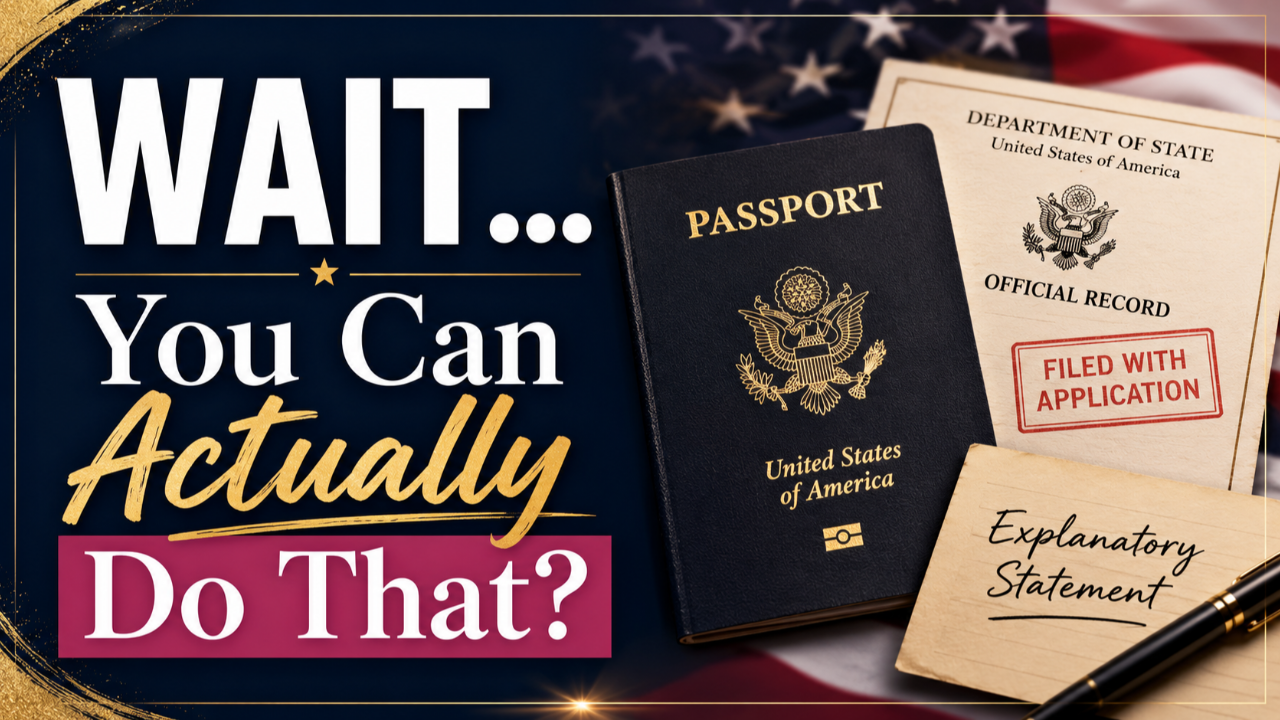
One of the most common reactions people have when they first learn about passport explanatory statements is simple:
"Wait... you can actually do that?"
The answer is:
Yes.
You can submit additional documentation with a passport application when done properly within the administrative process.
And for many people, that's where the conversation becomes much more interesting.
Beyond Filling Out Forms
Most people think of a passport application as a straightforward process.
Fill out the form.
Submit the required documents.
Attend the appointment.
Wait for the passport to arrive.
But what many people don't realize is that administrative processes are built upon records.
Applications create records.
Supporting documents become part of records.
Statements submitted with applications may become part of those records as well.
Understanding how administrative records are created can fundamentally change the way someone views the process.
What Is an Explanatory Statement?
An explanatory statement is a written document submitted alongside an application that provides additional information, clarification, or explanation regarding the applicant's position.
Within the context of passport applications, many people become interested in explanatory statements because they allow the applicant to communicate information directly within the administrative process.
Rather than relying solely on preprinted boxes and predefined categories, the explanatory statement becomes part of the overall submission package.
For many researchers and students of administrative procedures, this raises important questions about documentation, records, and how government agencies maintain files.
Why Official Records Matter
One of the most overlooked aspects of any government process is the official record itself.
What was submitted?
What was accepted?
What was retained?
What became part of the permanent administrative file?
These questions often matter more than opinions or assumptions.
Administrative records create documentation.
Documentation creates evidence.
Evidence allows people to examine a process based on records rather than speculation.
That is why many people become fascinated not just by the passport itself, but by the certified passport file that can later be requested from the Department of State.
The Difference Between Theory and Documentation
There is a significant difference between discussing ideas online and reviewing official records.
Social media posts are opinions.
Videos are interpretations.
Comments are conversations.
Administrative records are documentation.
For many people, seeing a certified Department of State file containing submitted documents, supporting records, and explanatory statements changes the discussion entirely.
It shifts the focus away from theories and toward evidence.
Away from assumptions and toward records.
Away from what people think happened and toward what the official file actually contains.
Education Creates Awareness
One of the most valuable things any person can do is learn how administrative processes work.
Read the statutes.
Review the procedures.
Study the records.
Examine the documentation.
The goal is not simply to accept someone else's conclusions.
The goal is to become informed enough to reach your own.
Because knowledge creates options.
And understanding begins with education.
Learn the Process for Yourself
If you'd like to learn more about passport applications, explanatory statements, Department of State records, certified passport files, and the documentary evidence surrounding the American National Passport process, you can access the free course below.
The training walks through the process step-by-step and explores the records and documentation involved.
👇 Free Course:
https://www.consciouscontracting.life/state_national_passport-course
