
The Difference Between Arguing Online… and Creating the Record
Jun 30, 2026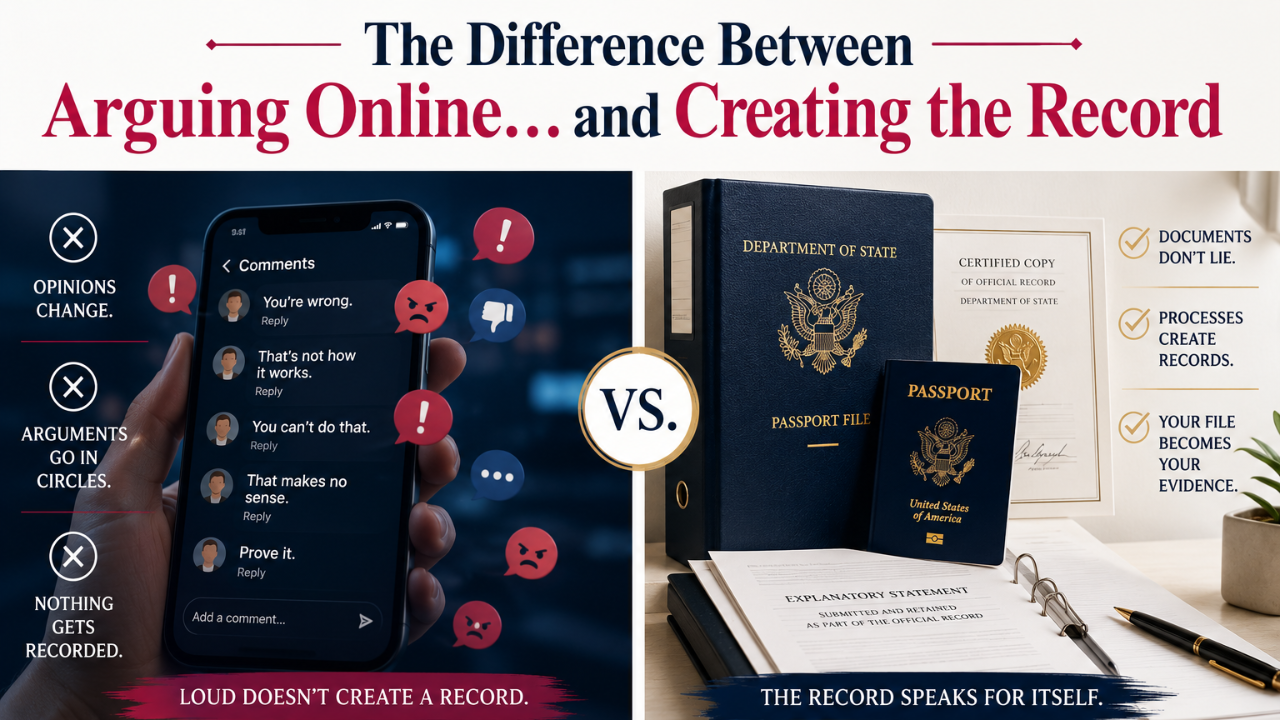
The internet is full of opinions.
Spend a few minutes reading the comments on any legal or administrative topic, and you'll find people debating definitions, statutes, procedures, and interpretations.
Discussion can be valuable.
But at some point, there is an important distinction to make:
There is a difference between debating a process and participating in it.
Understanding the Point
One of the most common misunderstandings people have is assuming that discussing political status is simply about labels.
In reality, many students who explore this topic become interested in understanding how official records are created, what documents are submitted, and how administrative agencies maintain those records.
For some, that includes learning about explanatory statements that accompany a passport application.
Rather than relying solely on conversations online, they become interested in understanding how documentation becomes part of an official administrative file.
Why Administrative Records Matter
Government agencies maintain records of documents submitted through their administrative processes.
When an application is accepted, supporting documentation may also become part of that official file.
For many researchers, reviewing certified administrative records provides an opportunity to examine the process using primary source documentation rather than relying on secondhand opinions.
The focus shifts from speculation to documentation.
From assumptions to records.
The Difference Between Opinion and Documentation
Social media can be a great place to exchange ideas.
But comments don't create official records.
Administrative filings do.
Whether someone agrees or disagrees with a particular interpretation, the value of examining official documentation is that it allows individuals to study the process for themselves.
Reading statutes.
Reviewing procedures.
Looking at certified records.
Drawing conclusions from the documents rather than from internet debates.
Education begins with investigation.
Learn Before You Decide
The purpose of education isn't to convince you what to believe.
It's to encourage you to read the statutes, examine the documentary evidence, and understand the administrative process firsthand.
Whether you ultimately agree or disagree, informed decisions are built on research—not assumptions.
Knowledge creates options.
And education creates awareness.
Explore the Process
If you're interested in learning more about:
- Department of State administrative records
- Passport applications and explanatory statements
- Certified passport files
- Documentary evidence
- The FOIA process
- Nationality-related statutes
You can access the free American National Passport Course, where these topics are presented in an educational, step-by-step format.
Start the free course here:
👉 https://www.consciouscontracting.life/offers/CGhZ7tax/checkout
The difference isn't winning an argument online.
The difference is taking the time to understand the process for yourself.
